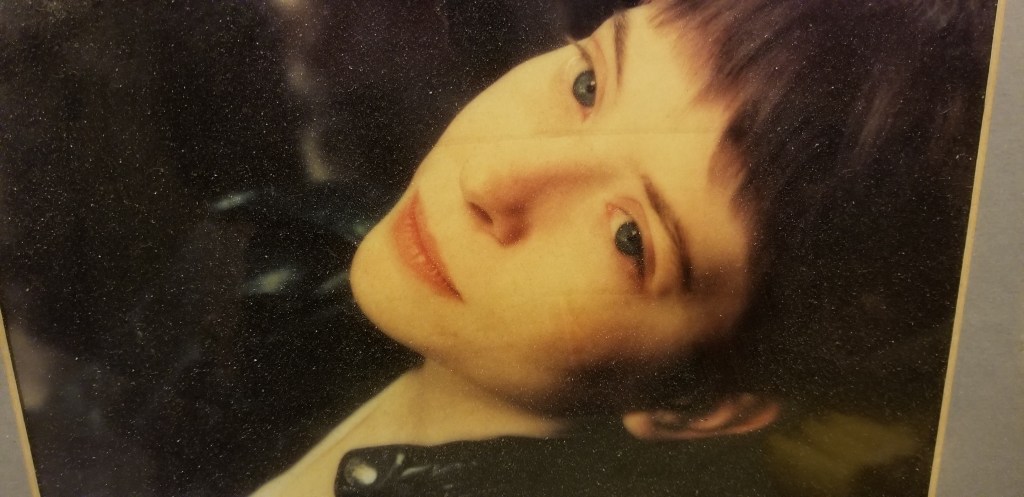
When I was about 13 or 14 years old, I read an article about David Bowie that claimed he was bisexual. I was curious (now we might call this bi-curious, ha!), and so I researched what being bisexual was all about. By research, I mean I asked my brother, who is 13 years older and was, at that time, heavily involved in counterculture stuff. He was coming out of his Glam phase at this point and it was my brother who turned me on to Bowie in the first place. So, he explained to me that there’s a spectrum and most people don’t fall on the extreme ends of the spectrum, which would mean most people are bisexual, which means it’s no big deal. This was around 1978 and my brother’s attitude would have been considered very far outside of the norm of the time.
I decided I, too, was bisexual. I liked girls. I liked boys. And that is where I stayed for years and years and years. Then, in my early 50s, my students taught me a new term: Pansexual. I didn’t understand what pansexual meant, or how it is any different than bisexual, because I hadn’t really contemplated gender as a spectrum yet. As a matter of fact, I considered gender bullshit, a social construct designed to keep women from attaining success and men from being house dads.
When my spouse came out as trans, I was forced to think about the language my students had been writing about and telling me about. I had to consider the language in a much deeper way than I had before, because I am still very much in love with my spouse, and she is transitioning from male to female and is shattering the binary for me and I need the language to describe how I feel, and there it is: Pan. I’m pansexual. I don’t give a shit what gender someone is. I love the person.
I considered gender bullshit, a social construct designed to keep women from attaining success
 Non
Non 